Clinical Education

Clinical Education, Medications

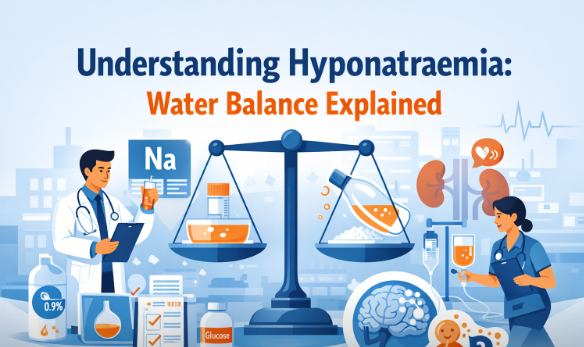
Hyponatraemia explained clearly, why sodium is about water, not salt

Hyponatraemia is one of the most common electrolyte abnormalities encountered in hospital practice. It appears on blood results across medical, surgical, oncology, and critical care settings. It can be mild and incidental. Or it can be life-threatening. Yet despite how frequently it occurs, hyponatraemia is often misunderstood. Many clinicians instinctively associate low sodium with “not […]

Hyponatraemia explained clearly, why sodium is about water, not salt Read Post »

poster image of a nurse with a cannular about taking blood from an arm
Clinical Education

Wrong vs Right Instructions to Patients During Cannulation or Phlebotomy: Debunking Common Myths

When it’s time to insert a cannula or take blood, healthcare workers often give quick instructions like “drink lots of water,” “clench your fist,” or “let me just tap the vein.” But how many of these actually help — and how many are just myths passed down in practice? This article breaks down some of

Wrong vs Right Instructions to Patients During Cannulation or Phlebotomy: Debunking Common Myths Read Post »

image of medicine
Clinical Education

Is “Finish Your Antibiotics Even After Getting Well” correct?

For decades, the advice to “complete your antibiotics course” has been repeated like gospel in clinical settings. Nurses reinforce it in discharge plans, pharmacists write it on labels, and doctors mention it in consultations. But is this guidance still evidence-based?The answer: it depends on the infection, the patient, and the antibiotic. Origin of the “Complete

Is “Finish Your Antibiotics Even After Getting Well” correct? Read Post »

Scroll to Top