Education

Nursing and Medical education

Clinical Education, Medications

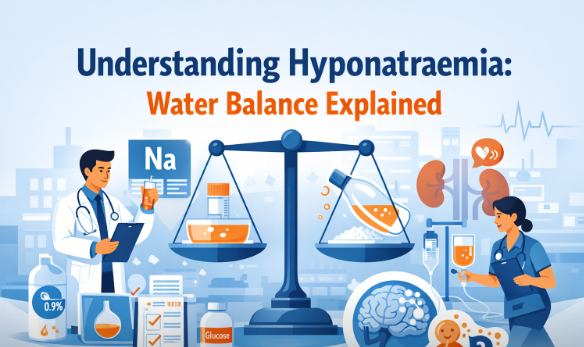
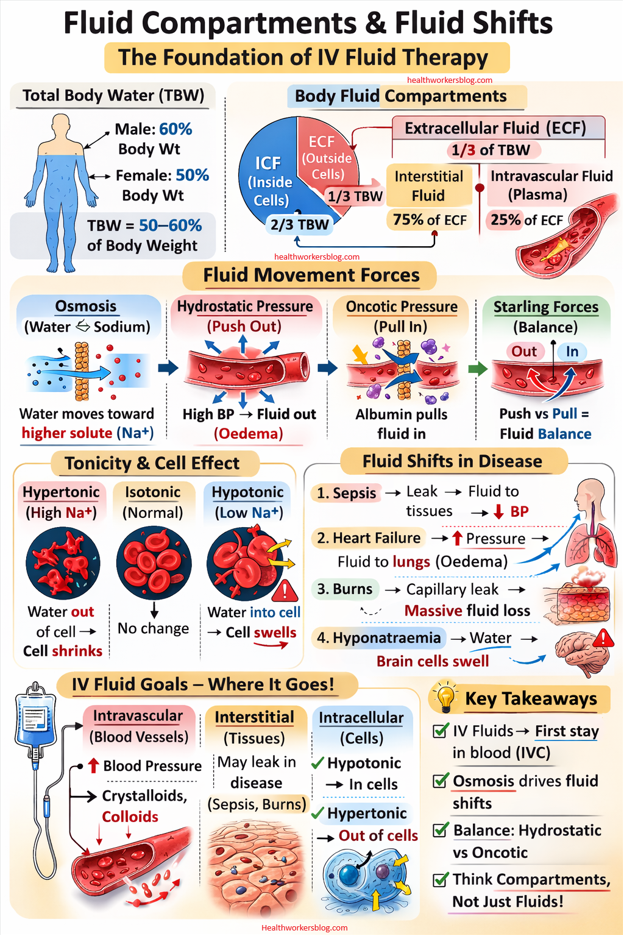
Hyponatraemia explained clearly, why sodium is about water, not salt

Hyponatraemia is one of the most common electrolyte abnormalities encountered in hospital practice. It appears on blood results across medical, surgical, oncology, and critical care settings. It can be mild and incidental. Or it can be life-threatening. Yet despite how frequently it occurs, hyponatraemia is often misunderstood. Many clinicians instinctively associate low sodium with “not […]

Hyponatraemia explained clearly, why sodium is about water, not salt Read Post »

Education, Social

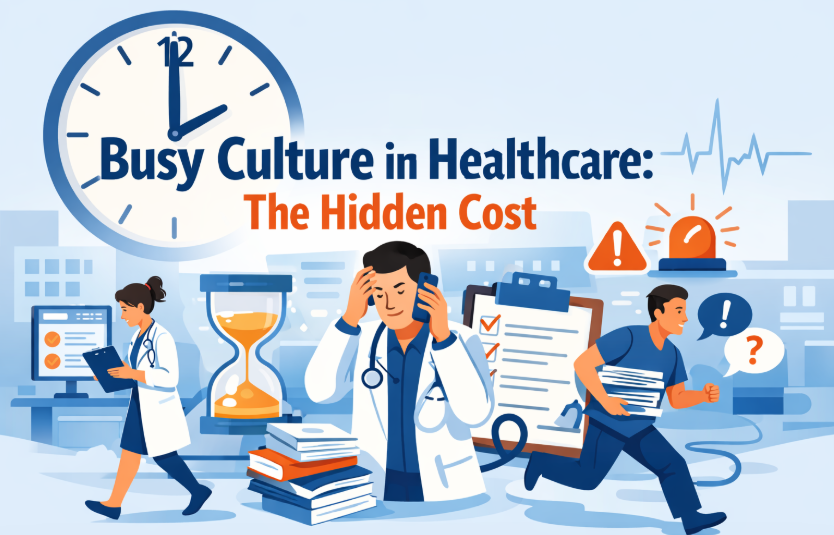
We’re Just So Busy”: The Phrase That’s Quietly Reshaping Healthcare Culture

There is a phrase you will hear in almost every clinical environment: “We’re just so busy.” It’s said at nurses’ stations.It’s said in handovers.It’s said when documentation is incomplete.It’s said when feedback is delayed.It’s said when tempers are short. It sounds harmless. Honest. Even reasonable. But over time, this everyday phrase does something subtle and

We’re Just So Busy”: The Phrase That’s Quietly Reshaping Healthcare Culture Read Post »

image showing caption of title and healthcare workers
Education, News and Politics, Social

2025: Recap & Reflections – A Groundbreaking year in healthcare

As we wrap up 2025, one thing is clear: this year pushed healthcare firmly into the future. Innovation moved faster, science went deeper, and care delivery began to look very different from what we were used to even a few years ago. From life-saving genetic treatments to artificial intelligence becoming part of everyday clinical work,

2025: Recap & Reflections – A Groundbreaking year in healthcare Read Post »

poster image of a nurse with a cannular about taking blood from an arm
Clinical Education

Wrong vs Right Instructions to Patients During Cannulation or Phlebotomy: Debunking Common Myths

When it’s time to insert a cannula or take blood, healthcare workers often give quick instructions like “drink lots of water,” “clench your fist,” or “let me just tap the vein.” But how many of these actually help — and how many are just myths passed down in practice? This article breaks down some of

Wrong vs Right Instructions to Patients During Cannulation or Phlebotomy: Debunking Common Myths Read Post »

image depicting healthcare education session
Education, History Lane

Think You Know the Flu Jab? Here’s what most healthcare workers won’t realise

How It All Began The story of the flu vaccine began with a global tragedy — the 1918 Spanish flu pandemic, which killed more than 50 million people worldwide. Back then, scientists didn’t know what caused influenza. Many blamed bacteria, particularly Haemophilus influenzae, until repeated failures to reproduce the illness in the lab proved otherwise.

Think You Know the Flu Jab? Here’s what most healthcare workers won’t realise Read Post »

Education, Technology in Medicine

Learn How to Use AI as a Nurse – Join Our Free 4‑Week WhatsApp Masterclass!

Artificial Intelligence (AI) is rapidly transforming healthcare – from smart prescribing tools to sepsis alerts and decision‑support systems. But did you know AI can also help nurses with reflections, portfolios, and career growth? At HealthworkersBlog, we are offering a FREE 4‑Week AI Masterclass for Nurses, starting 1st August 2025.This masterclass is designed for nurses with

Learn How to Use AI as a Nurse – Join Our Free 4‑Week WhatsApp Masterclass! Read Post »

image of medicine
Clinical Education

Is “Finish Your Antibiotics Even After Getting Well” correct?

For decades, the advice to “complete your antibiotics course” has been repeated like gospel in clinical settings. Nurses reinforce it in discharge plans, pharmacists write it on labels, and doctors mention it in consultations. But is this guidance still evidence-based?The answer: it depends on the infection, the patient, and the antibiotic. Origin of the “Complete

Is “Finish Your Antibiotics Even After Getting Well” correct? Read Post »

image showing someone surprised at catheter
Education

Five small catheter mistakes that cause big harm and how to never make them again

Ask any experienced nurse and they’ll tell you: inserting a urethral catheter feels routine right up to the moment something goes wrong. Over the past decade, UK incident-reporting systems have logged thousands of catheter-related injuries, and the same handful of technical slips keep turning up. The good news? Each one is entirely preventable with a

Five small catheter mistakes that cause big harm and how to never make them again Read Post »

pictures showing people conversing
Education

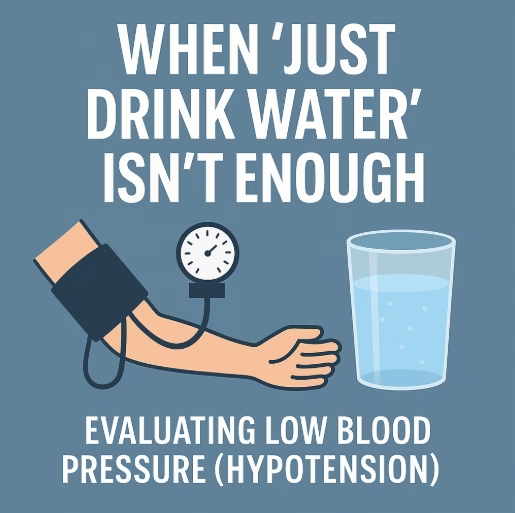
Does Raising the Foot of the Bed Actually Work When Blood Pressure Drops? The Science Behind a Common Practice

If you’ve ever been in a hospital – or cared for someone who has – you might have observed a common practice: when a patient’s blood pressure begins to dip, the nursing or medical team may swiftly raise the foot of the bed. It seems like a simple, intuitive action, often portrayed as a quick

Does Raising the Foot of the Bed Actually Work When Blood Pressure Drops? The Science Behind a Common Practice Read Post »

Scroll to Top